Environment

OMA - Environment

Preserving the Environment

Environmental management is embedded throughout decision-making processes across the organization and supported by a preventive approach that promotes resource efficiency, operational resilience, and long-term value creation. Through environmental programs, operational controls, and continuous improvement initiatives, OMA seeks to reduce its environmental footprint while supporting the sustainable development of the regions where it operates.

The Group’s 13 airports hold the Environmental Quality Certificate granted by the Federal Attorney for Environmental Protection (PROFEPA). This certification validates compliance with federal and local environmental laws, regulations, and Official Mexican Standards set by the Ministry of Environment and Natural Resources (SEMARNAT).

Environmental Impact

Significant environmental aspects
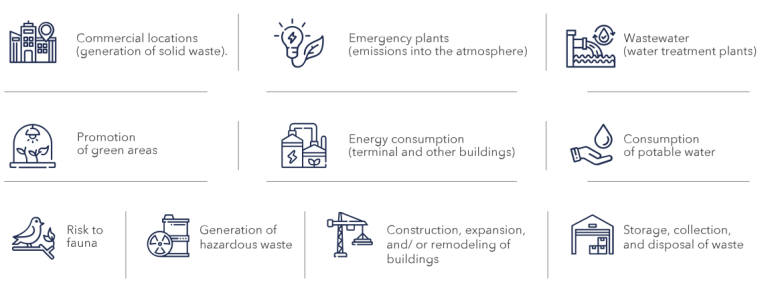
Diagram of significant environmental aspects: impacts of airport operations around the globe

87% Electricity consumption came from clean sources

Energy consumption

The Company’s energy requirements arise mainly from electricity consumption, which is used for illumination and air conditioning at airports, and to a lesser extent, the use of uels such as gasoline, diesel, natural gas, and LP gas used in construction machinery and vehicle transport.
Emissions of CO2 per passenger

KgCO2 e/PAX (Scope 1 and 2 Emissions)

2018Base year
1.53
2022 (i)
0.10
2023 (i)
0.08
2024 (i)
0.12
2025 (i)Audited
0.18
2025OMA's Objective
0.65

OMA works to minimize the environmental impacts of its operations and the resulting emissions while actively contributing to the commitments established for the VINCI Airports network.

In 2025, OMA generated emissions totaling 5,315 metric tons of CO2 equivalent (tCO2e). Scope 1 emissions accounted for 1,132 tCO2e, representing 21% of the total, while Scope 2 emissions were 4,183 tCO2e, representing 79%. Total Scope 1 and Scope 2 emissions were lower than in the 2018 baseline year.


i. Verified by Addere Solutions, S.C.

Waste management

Sustainable waste management is a key component of OMA’s environmental strategy. Through the implementation of operational controls and waste management procedures, the Company seeks to minimize the environmental impacts associated with airport activities while promoting the efficient use of resources.

In 2025, OMA’s airports generated a total of 2,105 tons of waste, of which 5.37 tons were classified as hazardous waste and 2,099 tons as non-hazardous waste. Through proper classification and management processes, the Company seeks to ensure the responsible handling and disposal of waste while minimizing its environmental footprint.

Hazardous Waste

Hazardous waste requires specialized handling due to characteristics such as corrosivity, reactivity, explosivity, toxicity, flammability, or the presence of infectious agents that may pose risks to human health or the environment. This category also includes contaminated materials, such as packaging, containers, and soil, as well as other waste streams classified as hazardous under applicable Mexican regulations, including NOM-052-SEMARNAT.

At the airports, hazardous waste is generated from the following activities:

  • Airport operational activities
  • Maintenance-related tasks
  • Storage of aerosols at airport inspection points, excluding their presence in sterile areas of aerodromes. If carried through passengerinspection points, they must be contained in individual containers with a capacity not exceeding 100 ml, following the guidelines of Mandatory Circular CO SA-17.2/10 R3 issued by AFAC.

Non-Hazardous Waste

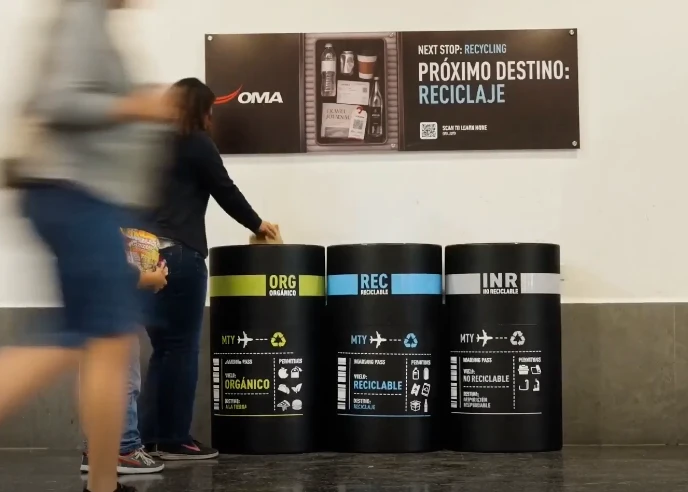
Our Company’s operations generate non-hazardous waste (special handling) from complementary and commercial airport services, such as: common waste, inorganic and organic waste, paper, cardboard, PET, aluminum, and garden waste, among others. Each airport classifies and segregates waste in compliance with state ecological ordinances. The management cycle is as follows:

OMA - Non-Hazardous Waste

Waste handling process

Non-Hazardous (Special Handling)

OMA - Waste handling process imagen de referencia 1
OMA - Waste handling process imagen de referencia 2

Responsible water consumption

Water is a vital aspect in airport operations, and an indispensable resource for providing service to clients and passengers. OMA therefore focuses on rational and responsible use or reducing water consumption, with special consideration for areas that face water stress.

To fulfill our commitment to responsible water consumption, we have implemented a range of measures, including:

  • Installation of water treatment plants at all 13 airports
  • Analysis of processes to identify opportunities for reducing water consumption
  • Replacement of conventional equipment with eco-efficient alternatives
  • Installation of shut-off valves to prevent waste
  • Regular inspection of pipes to detect and address any leaks
  • Utilization of water created by air conditioning condensation
  • Calibration of bathroom fixtures to ensure efficient water use
  • Incorporation of presence sensors and automatic shut-off taps in restrooms
  • Implementation of water flow sensors to monitor usage
  • Reuse of treated water for irrigation purposes in green spaces
  • Water conservation awareness programs
  • Maintenance of facilities
  • Smart monitoring systems to monitor water consumption and water cycles
OMA - Responsible water consumption

Biodiversity

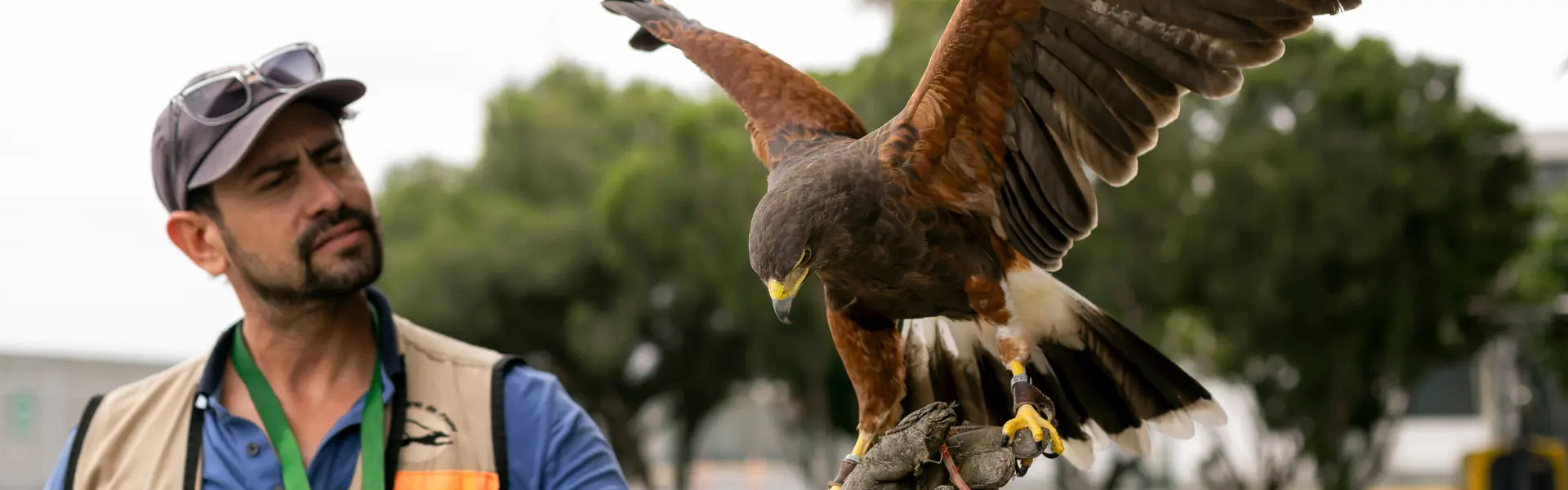
The environmental challenges being faced globally require the commitment of all members of society to mitigate impacts and to preserve resources for these and future generations. Therefore, at OMA we have implemented strategies that seek to protect the biodiversity that exists in the areas surrounding the Group’s airports.

One example of our commitment to biodiversity is the establishment of the Management Unit for the Conservation and Sustainable Use of Wildlife (UMA) at the Zihuatanejo airport (as a type of nursery), with the following objectives:

  • Reforestation of buttonwood mangroves
  • Regeneration of coastal lagoon ecosystems
  • Raising awareness about the importance of mangroves
OMA - Biodiversity

SUSTAINABILITY